
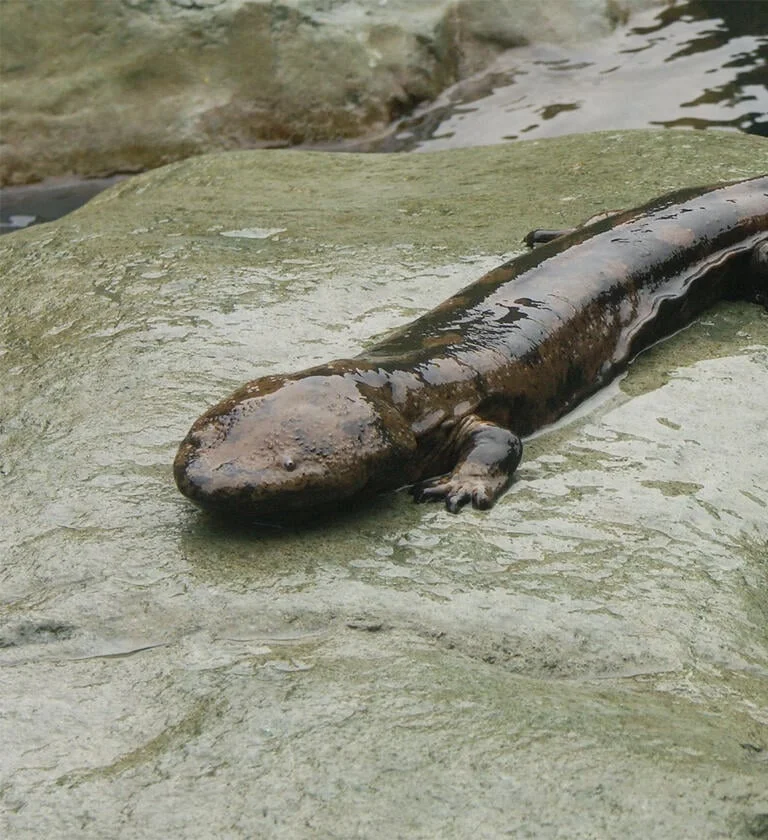
I am not a big zoo person, but I went to Ueno Zoo in Tokyo with one mission: to see o-sancho, or in English, the Japanese giant salamander.
At the front gates I was greeted by the most massive elephant I have ever seen. Its enclosure felt incredibly small for an animal of that size, and it seemed agitated to me.
The entire time I was there, all I could think about was how zoos need not just a rebranding, but a structural change.
In contrast, I was really impressed by Osaka's Aquarium Kaiyukan. This was one of the first places where I saw an institution make an effort to show animals as part of an ecosystem rather than as isolated attractions. Its exhibits recreate environments such as the Japanese forest, Monterey Bay, Antarctica, and the Great Barrier Reef, with multiple species occupying the same environment.
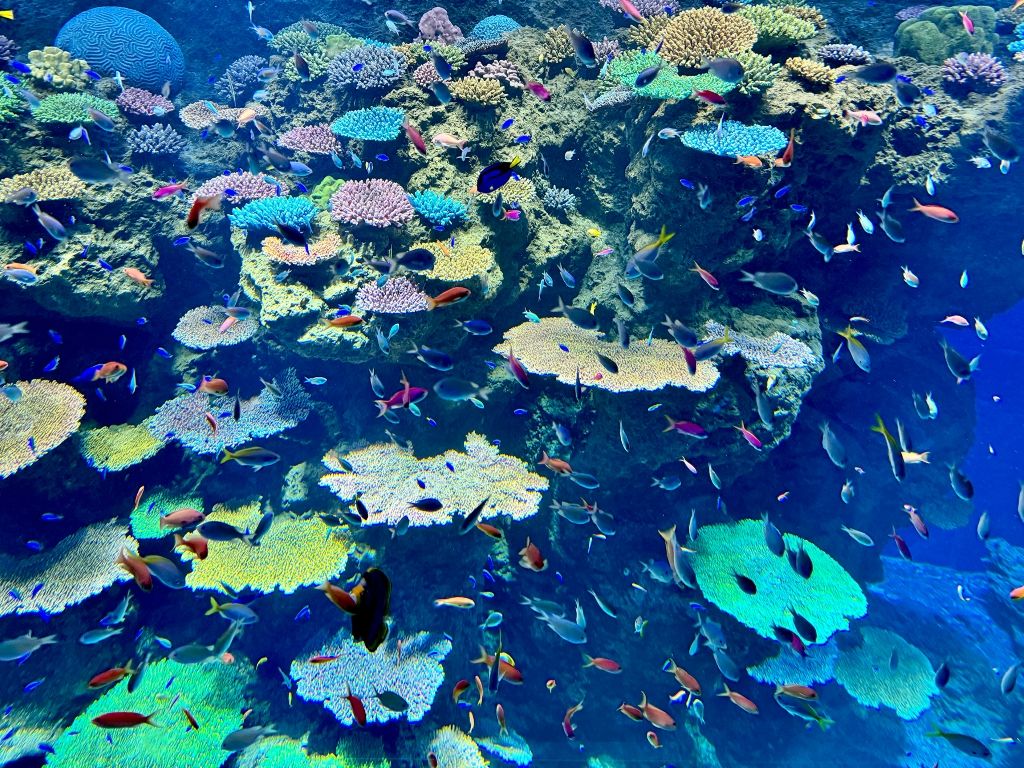
I absolutely love this.
What if zoos taught ecosystems instead of animals?
A lot of zoos already have an educational component, but much of it seems to be aimed at children or limited to basic facts: this is an elephant, this is where it lives, this is what it eats.
This is such an underdeveloped opportunity.
Imagine going to a zoo and taking a workshop on propagating native plants. Or learning how to identify the trees growing around your city. Or understanding which insects depend on those trees, which birds depend on those insects, and what happens when one piece of the system disappears.
You could even have a salamander disease workshop. Visitors could investigate why a salamander population is declining by testing water quality, examining its habitat, looking at microbes under a microscope, and figuring out how a disease might spread between ponds.
Suddenly, the salamander isn't just an animal in a tank. It is connected to the water, soil, microorganisms, other animals, and even the people walking through its habitat.
This seems much more useful to me than simply learning that an elephant eats hundreds of pounds of vegetation a day.
We feel more removed from environmental problems when we cannot identify the things around us. If I can name the tree outside my house, recognize the bird sitting in it, and understand what insects depend on it, that tree stops being "a tree." It becomes part of a system that I can actually see.
Quick side note — I recently watched a video on how words from the natural world are disappearing from dictionaries and found it really fascinating.
Something as simple as knowing the name of a tree creates a relationship with it.
The problem with the big animals
Obviously, a big appeal of zoos is getting to see animals that we wouldn't normally encounter.
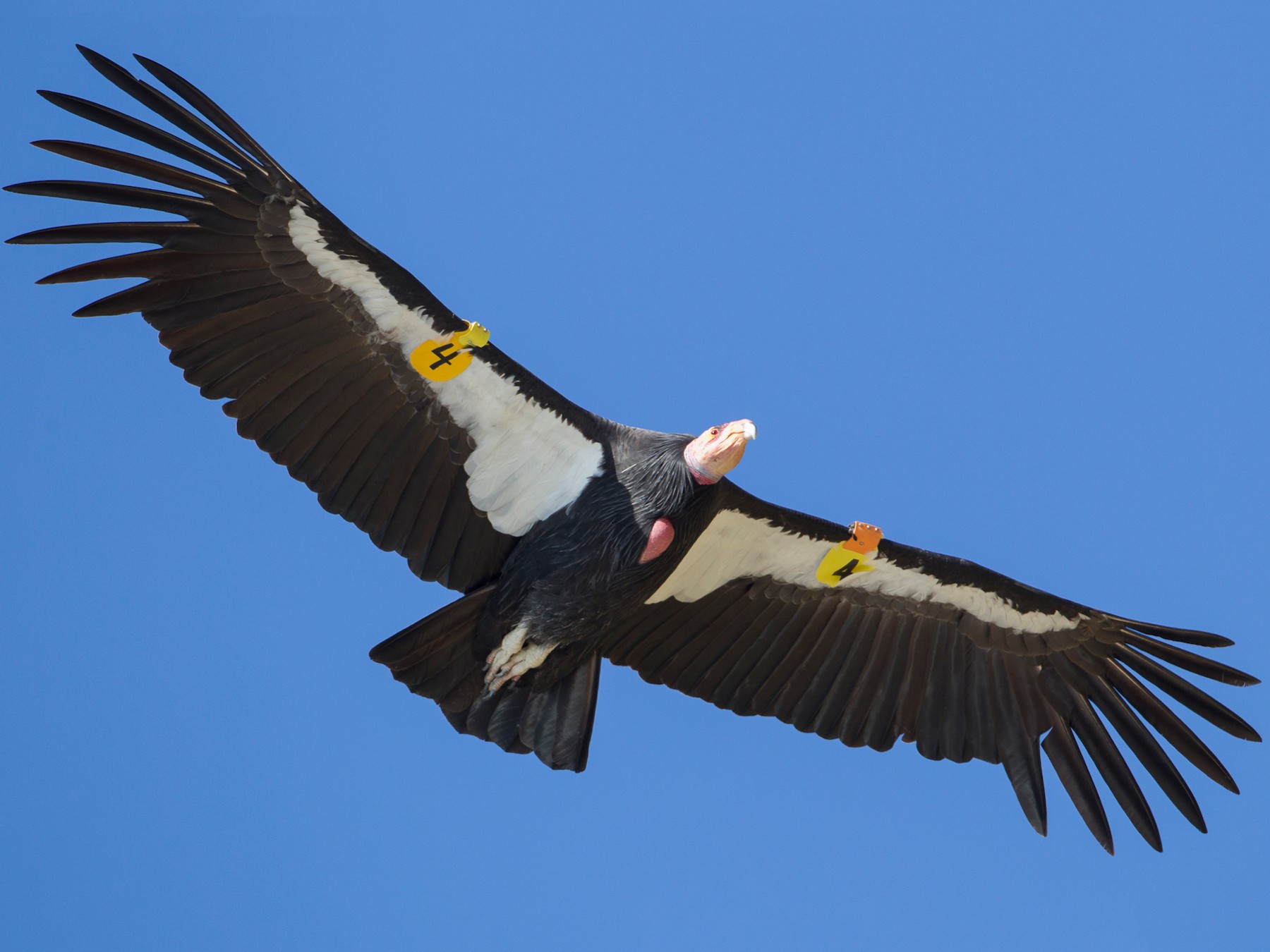
There is also a strong argument for zoos' captive breeding and reintroduction programs. The California condor is a great example. In 1982, only 23 remained. By 1987, every remaining wild condor had been brought into captivity. Reintroductions began in 1992, and the wild population has since grown to more than 300.
Another example, discussed in Jane Goodall's work, is the black-footed ferret, which was once considered extinct in the wild. Captive breeding and reintroduction have helped bring the species back into the wild.
All this is to say: I don't believe the answer is to get rid of zoos.
We need to reevaluate what kind of environment we can create for these animals. This is particularly important when looking at larger animals.
An elephant can be given enrichment. It can be given objects to manipulate, food puzzles, training exercises, social interaction, and opportunities to explore.
But I still wonder: how close can enrichment actually get us to recreating a natural environment?
At some point, there is a difference between giving an animal things to do and giving it an environment in which it can live.
An elephant does not naturally exist as an elephant-shaped attraction. It exists within a landscape.
It walks. It forages. It interacts with other elephants. It follows water. It responds to weather. It encounters other species. Its environment changes around it, and its behavior changes the environment in return.
That is an ecosystem.
Maybe zoos should think smaller
This is where I think zoos could change most dramatically.
Instead of always thinking bigger and bigger, maybe they should think smaller and more complex.
Large animals are difficult to house in anything resembling their natural environment. But a forest floor, wetland, stream, desert ecosystem, or coral reef can be recreated at a much smaller scale.
This is where aquariums and vivariums have an advantage.
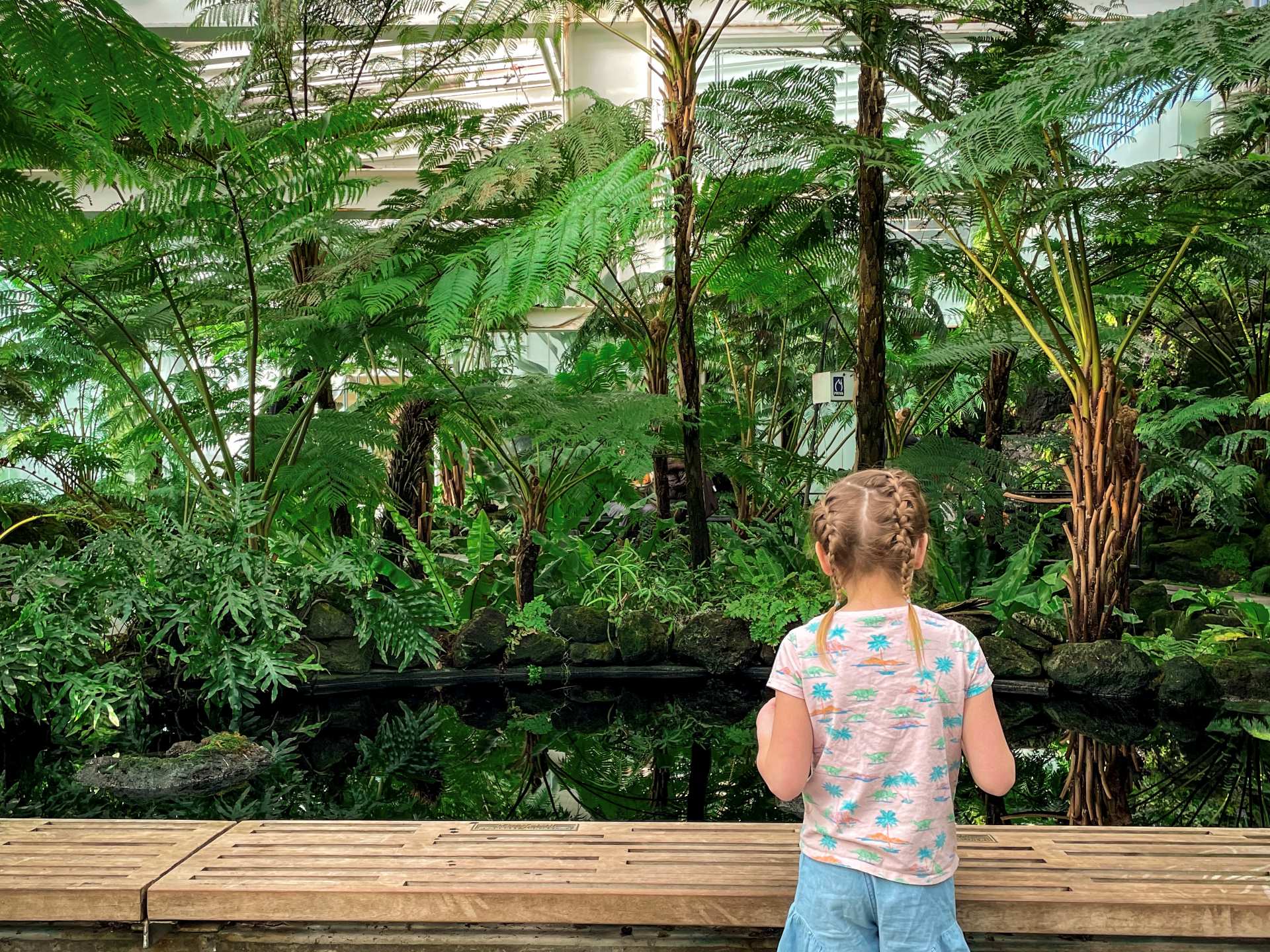
At Kaiyukan, you get to see the world around the animal. Fish swim through reconstructed reefs. Penguins occupy a land-and-water environment. The Japanese forest exhibit includes river fish and creatures that live around the water.
You get to see the system instead of just the species.
How cool would it be if you walked into a recreated Minnesota wetland instead of walking past a collection of individual cages?
You could see the plants, fish, insects, amphibians, birds, and mammals that interact there. You could learn how water moves through the system. You could touch the soil. You could learn which plants are invasive. You could propagate one of the native plants and take it home.
That feels much closer to conservation to me.
Zoos already have something incredibly valuable: people who are willing to walk through their doors specifically because they want to see living things.
The opportunity is to make that encounter about more than seeing the animal.