
Information has never been as accessible as it is now. The question will no longer be "Can I build this?" but "What should I build?"
I read a book called The World Is Flat a while back. The title might sound like some crazy conspiracy theory, but Thomas Friedman's argument is essentially that technology has leveled the global economic playing field. He describes three eras of globalization: colonization, industrialization, and software. Each era made it easier for people and companies to participate in the global economy, regardless of where they were physically located.
That is a wildly simplified summary of the book, and it leaves out a lot of nuance. But the conclusion that stuck with me was accessibility. We have reached a point where the tools and information once locked behind institutions, capital, or geography are now a search bar away for a large chunk of the population.
So, in a world where anyone can create almost anything, what do you create?
This question has been bothering me because I love building things. But AI and increasingly accessible software have removed some of the labor of love from that process, for better or worse.
If the barrier to execution continues to fall, then execution becomes less of a differentiator.
Creativity becomes the separator.
But how do you become more creative?
I've been looking at the bottleneck. My conclusion is that creativity isn't necessarily about having more ideas. Most people can generate ideas, and I believe people are inherently creative. The harder part is choosing which ideas are worth pursuing.
Because of this, I've become obsessed with the idea of creative constraints.
The case for thinking inside the box
A constraint sounds like the opposite of creativity. People say "think outside the box," not "think inside the box."
But some of the most interesting creative work comes from exactly this tension. A constraint forces you to make decisions. It eliminates possibilities, but in doing so, it gives you something to work against. I also hate decision fatigue, and this really seems to reduce the number of decisions you have to make.
Suddenly, the question isn't "What could I possibly make?"
It's "Given these constraints, what is interesting?"
That is a much easier question to answer.
Some famous examples
The Dr. Seuss constraint — resource limitation
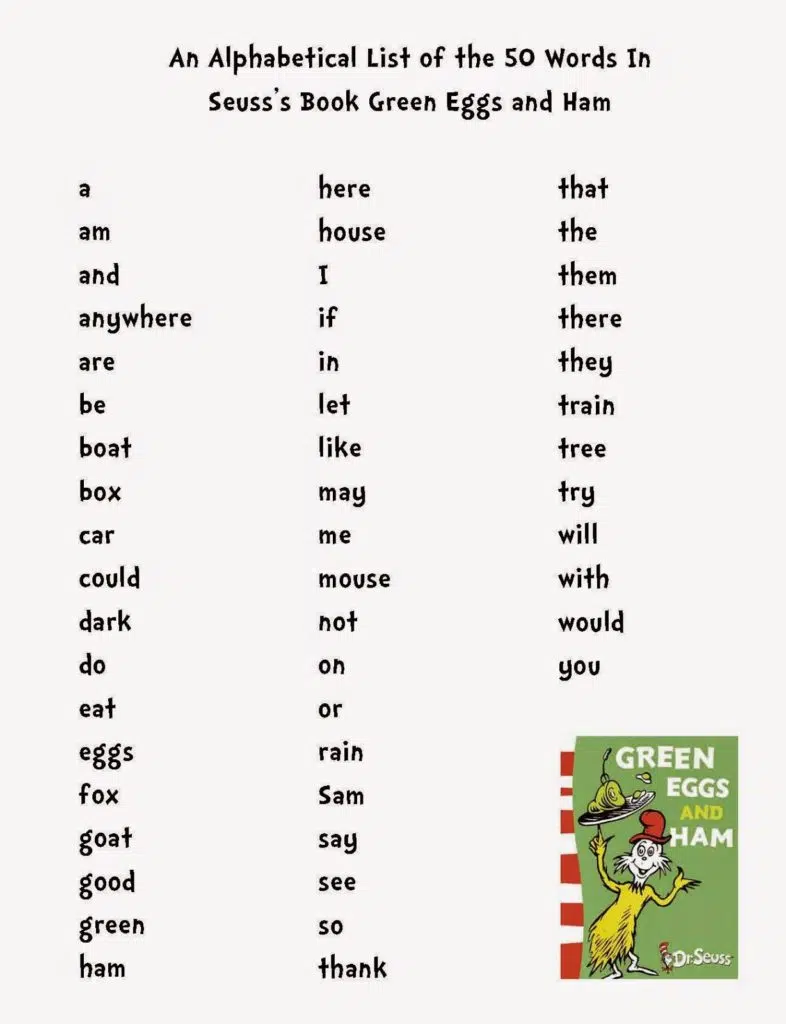
Bennett Cerf, co-founder of Random House, bet Dr. Seuss $50 that he couldn't write a book using only 50 distinct words.
The result was Green Eggs and Ham.
The Twitter / Vine constraint — format limitation
Twitter's original 140-character limit forced users to communicate in an extremely compressed format. Vine's six-second video limit did something similar, creating a new style of fast-paced, highly edited comedy.
Dogme 95 — process limitation
In 1995, a group of filmmakers (including Lars von Trier) created a manifesto to rescue filmmaking from Hollywood special effects. They banned special lighting, optical effects, imported sets, and superficial action. They had to rely purely on raw acting and story, resulting in deeply impactful cinema.
Apollo 13 — crisis limitation
When the spacecraft's CO2 scrubbers began to fail, engineers on Earth were given a literal box of the random spare parts available on the ship and told: make a square filter fit into a round hole using only this. A very intense version of a creative constraint.
Flexing the muscle
I obviously wanted to put this into practice, so here are some exercises I've tried.
The four-word matrix
Take four random nouns. Set a timer for 3 minutes and write a paragraph connecting the four words.
Mine were: tea, soccer, dominos, and pens.
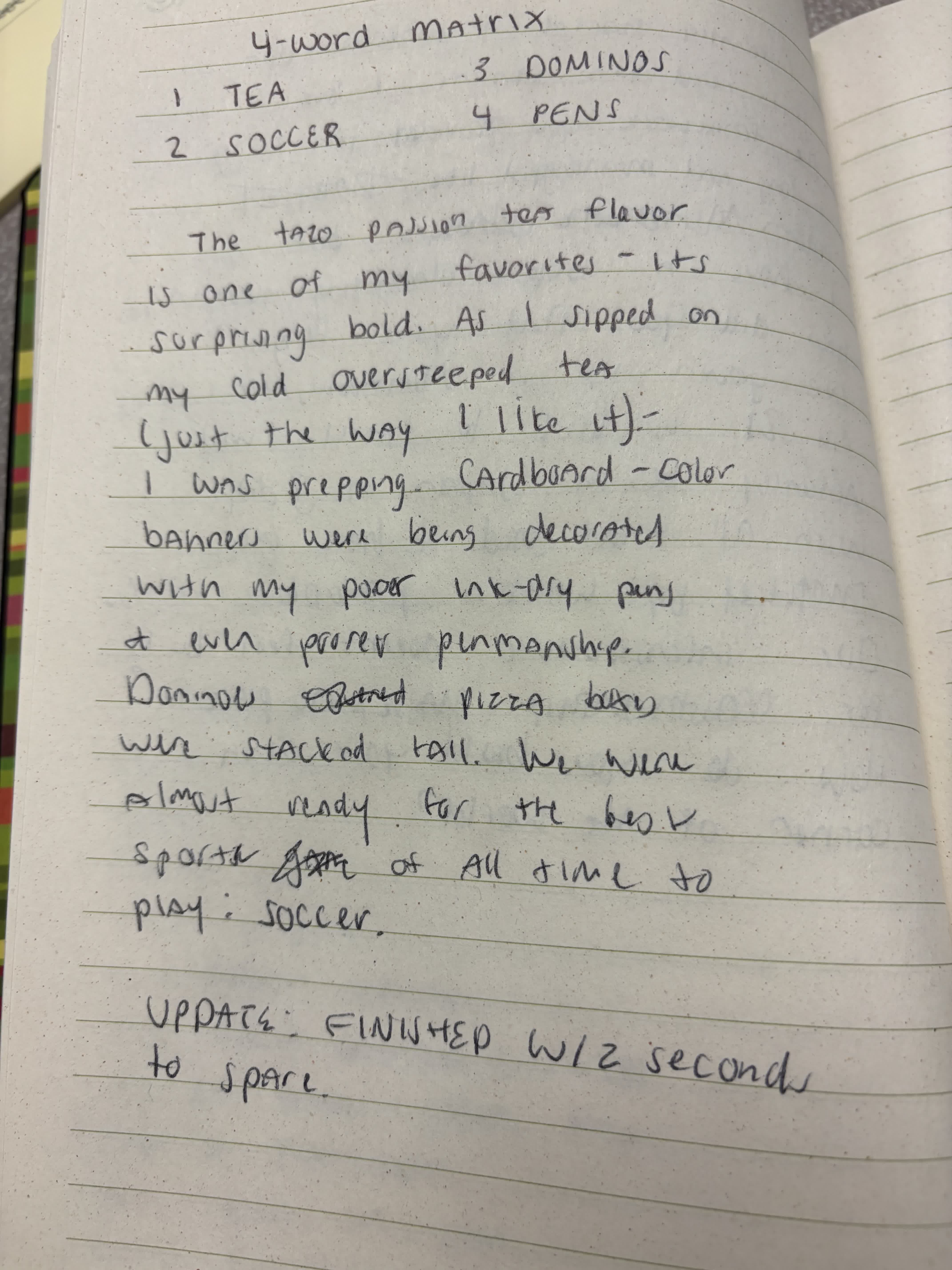
I found this exercise super fun and quick. When it comes to being creative, it really is like a muscle you have to flex, and this was a workout I could feel. When I originally wrote down my words, I was thinking of actual tile dominoes, but I wasn't sure how to tie those in. I ended up using the word in the context of Domino's pizza. A fun little twist.
The 25-word sprint
Just like it sounds — explain an idea using exactly 25 words.
Not 24. Not 26. Exactly 25.
This forces every word to earn its place. You have to strip away the intellectual fluff. If you can't explain what you're trying to make in 25 words, maybe the idea isn't clear yet.
The 30 circles test
I actually did this one at work with a group of three.
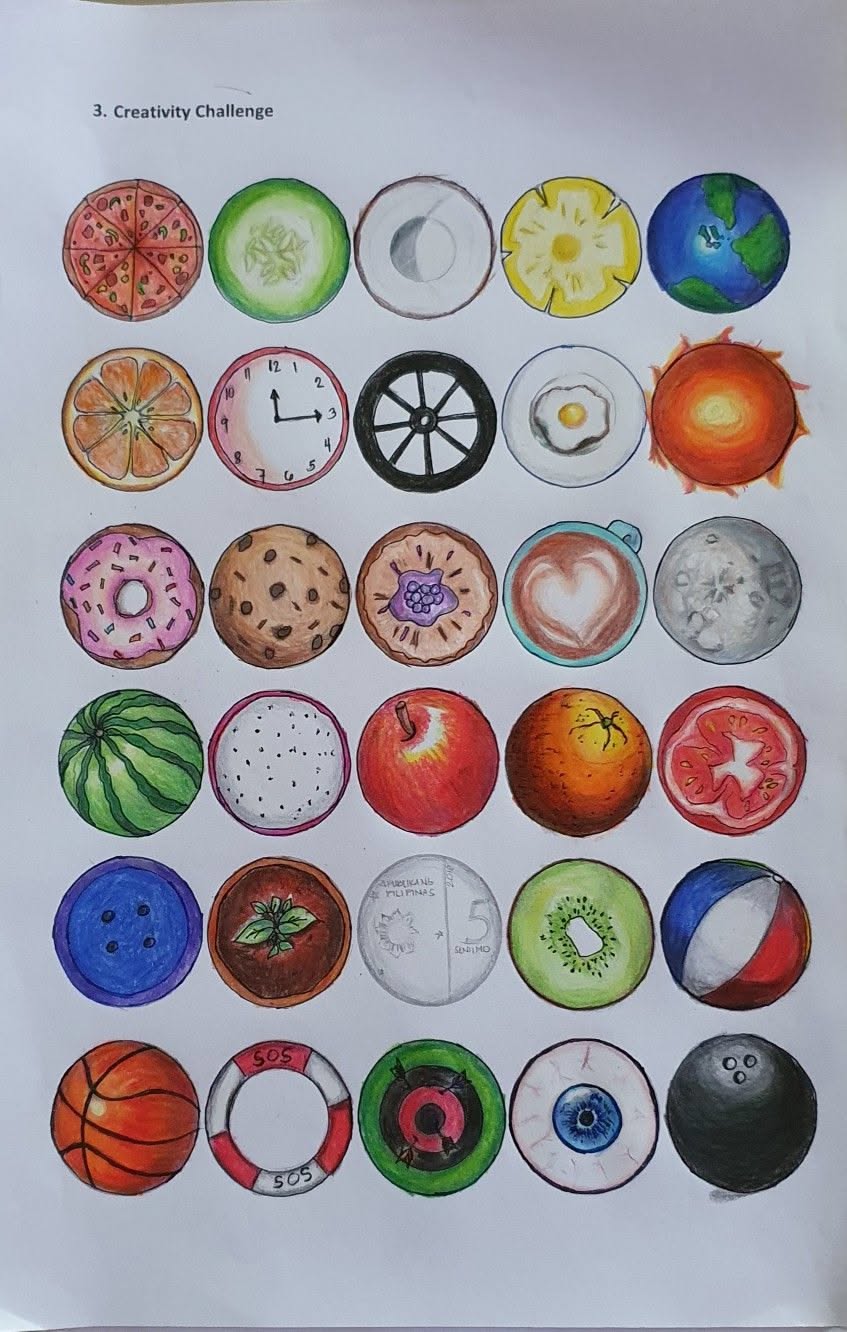
The exercise is simple: draw 30 circles and, in three minutes, turn as many as possible into recognizable objects. A clock. A pizza. A globe. A steering wheel. A cookie.
It was surprisingly hard.
We got 24. The winner got 27. Nobody got 30.
The first few circles are easy. But eventually, you run out of the obvious things and want to repeat old ideas.
My takeaways
Constraints teach you how to look at a problem.
When everything is possible, your brain can wander indefinitely (and mine will). When something is constrained, you have to make a choice.
For most of history, creativity came with constraints we didn't choose: limited tools, limited time, limited money, limited information. A lot of those constraints are starting to disappear.
Maybe that means creativity will need new ones.