
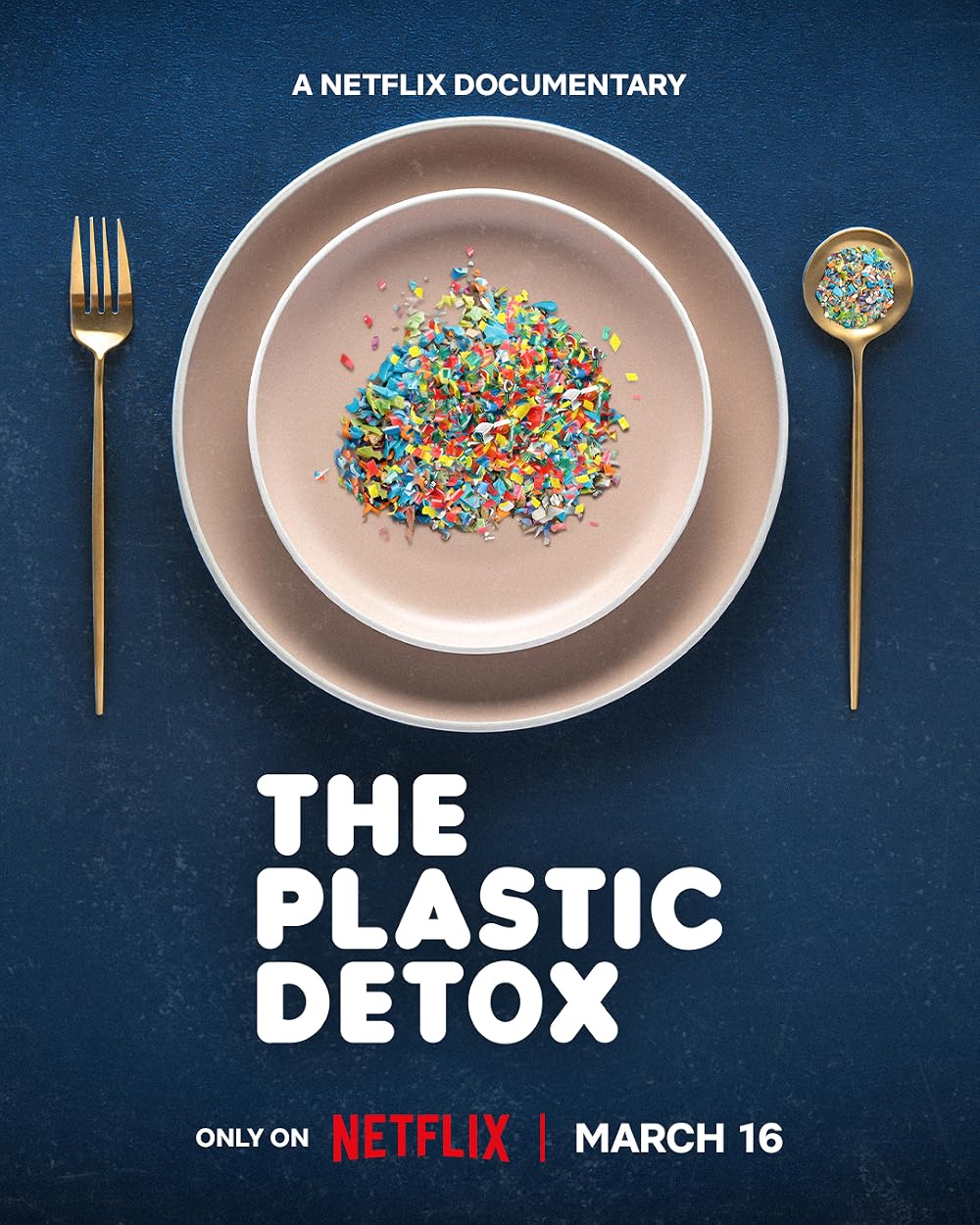
I recently watched the Netflix documentary The Plastic Detox. To describe it in one word: mortifying.
The film follows Dr. Shanna Swan, who is so credentialed that I can't include everything here without boring you. She has published more than 200 peer-reviewed papers, earned a PhD from Berkeley, an MA from Columbia, and has dedicated a large portion of her life to researching phthalates, BPA, and endocrine-disrupting chemicals.
If you are like me two days ago, you are probably wondering: what is a phthalate? What is an endocrine disruptor? Here's the plain-language version:
- Phthalates are a group of synthetic chemicals primarily used as "plasticizers" to make plastics like PVC soft and flexible. They're also used in personal care and household products to retain scents and help products stick to the skin.
- BPA (Bisphenol A) is an industrial chemical primarily used to make hard, clear plastics and epoxy resins. It's commonly found in reusable water bottles, the linings of canned foods, and even thermal paper receipts.
- The endocrine system is the body's network of glands that produce and release hormones into the bloodstream. These hormones regulate critical functions such as metabolism, growth, mood, sleep, and reproduction.
The next logical question is: why are phthalates and BPA bad?
Endocrine Disruptors and Obesogens
Dr. Swan does a great job explaining this. These chemicals are endocrine disruptors, meaning they interfere with hormones that regulate everything from mood and sleep to metabolism, fertility, and development.
They also act as obesogens. It does exactly what it sounds like — they promote fat storage. This happens by altering the hormonal signals that regulate hunger, leptin, and ghrelin, slowing your resting metabolism, and changing how your body processes and stores calories. Over time, exposure can shift the body's baseline toward fat storage rather than fat burning.

Even more concerning, animal studies suggest some of these chemicals can cause epigenetic changes. Epigenetics refers to changes in how genes are turned on or off without changing the DNA sequence itself. In mouse studies, exposure to certain endocrine-disrupting chemicals has been linked to effects that persisted for four or more generations.
Not all mouse studies translate perfectly to humans, but considering our already-high obesity rates, it's scary to consider.
The Experiment
Sperm counts in Western men have dropped by roughly 50% over the last 50 years. Yes, that's a five-zero, as in fifty.
The documentary itself is an experiment to see if six couples who had been trying to conceive for anywhere from two to ten years could improve fertility by reducing exposure to endocrine-disrupting chemicals. Spoiler alert: three of the six couples conceived.
After just three months:
- BPA levels dropped by roughly 80%.
- Phthalate levels decreased by an average of 18%.
- Five of the six men improved semen quality on multiple measures.
- One participant increased his motile sperm count by 50%.
- Another increased sperm concentration by 180%.
There were positive side effects outside of increased fertility too: a third of participants lowered their BMI, 80% reported improved sleep quality, 60% reported increased energy levels, and 86% said they planned to continue the lifestyle changes.
The documentary also touched on green chemistry and the lack of toxicity education historically built into chemists' training — a gap that's contributed to products that later turned out to be harmful, like asbestos. It's a pattern that echoes in our current plastic situation.
When pregnant women are exposed to certain endocrine-disrupting chemicals, the effects may potentially influence multiple future generations.
A few more takeaways that stuck with me: microplastics have been detected in human breast milk, and endocrine disruptors have been linked to earlier puberty and menstruation.
Plenty of examples of plastic products that leach chemicals into us were covered — food containers, canned foods, fragrances, receipts, cosmetics, non-stick cookware, plastic cutting boards, and disposable water bottles left in hot cars. However, very few brand names or alternatives were presented.
The Swaps I'm Making
So I did a deep dive, and these are the basic everyday products I'll be buying from here on out. If you care about your health, you might want to consider making some swaps too.
Disclaimer: these recommendations are based on currently available information, and "plastic-free" and "non-toxic" are evolving areas with no universally accepted standard.
If you only make five swaps, I'd prioritize these:
- Fragranced laundry detergent → Meliora or Molly's Suds
- Conventional shampoo → Plaine Products or natural shampoo bars from brands like Ethique
- Plastic toothbrush → Brush with Bamboo
- Conventional toothpaste → Bite or Huppy
- Polyester underwear → organic cotton options from Kent, Cottonique, or Subset
The Caveat
This study lasted only three months and involved a very small sample size. The documentary ended by explaining that these results would support applications for larger studies. A sample size this small should absolutely be taken with a grain of salt.
But the broader body of evidence surrounding endocrine disruptors is large, growing, and difficult to ignore.
Final takeaway: plastics are out.